STG FINANCE IS HERE TO HELP YOU.
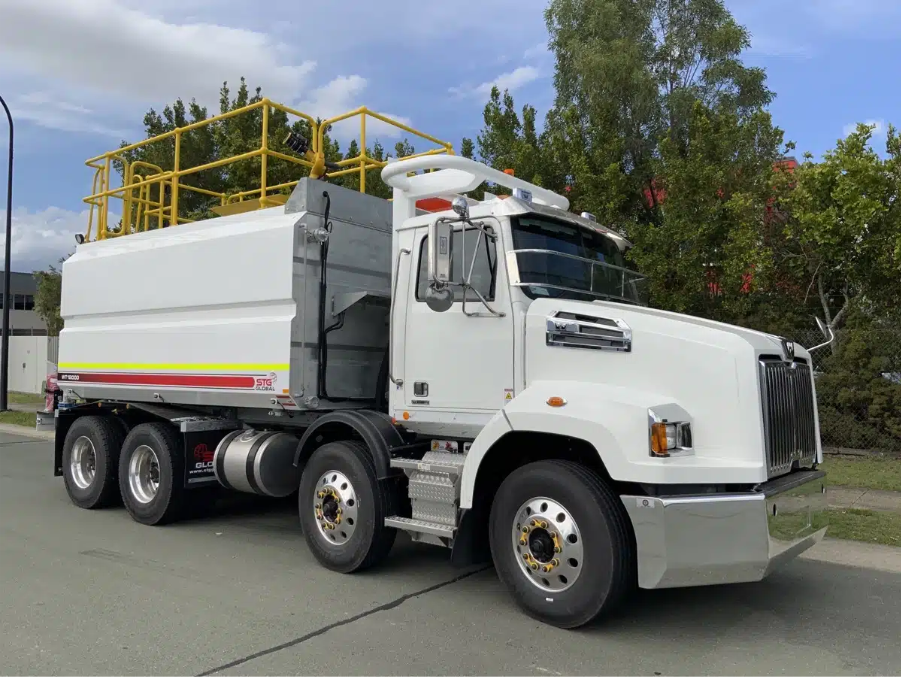
Choosing the right water truck size starts with understanding how the truck will be used on site. The amount of water required during a shift, the distance to refill points, site access and the application all influence which capacity and chassis configuration deserves consideration.
STG Global offers water trucks from 8,000L to 19,000L across 4×2, 6×4 and 8×4 chassis configurations. Queensland operators can compare the available water trucks for sale in Queensland once the operating requirements of the site are clear.
The following factors can help narrow the range before individual truck specifications are compared.
What Determines the Water Truck Size You Need
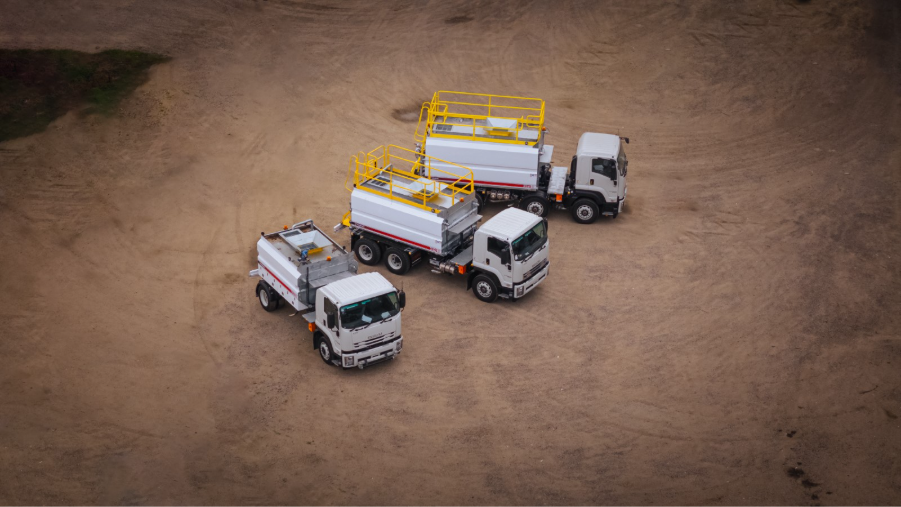
Tank capacity is one part of the selection process. The truck also needs to fit the work it will perform and the environment it will operate in.
| Factor | What to Check | Why It Matters |
| Application | Civil construction, mining, roadworks, dust suppression or water cartage | Influences capacity, chassis and equipment requirements |
| Water demand | Expected water use during a normal shift | Helps narrow the capacity required |
| Refill point | Distance and travel time to the water source | Longer refill trips can reduce operating time |
| Site access | Roads, entrances and turning areas | Larger truck configurations require suitable space |
| Water distribution | Sprays, hose, cannon or other equipment | Affects how water needs to be delivered on site |
Working through these areas gives you a more useful starting point than selecting a truck from tank capacity alone.
Match Water Truck Size to the Application
The intended application should be established early because different sites place different demands on a water truck.
Water Trucks for Civil Construction
Civil construction projects commonly use water trucks for dust suppression, road watering and general site water distribution.
Truck movement can be an important consideration on active sites. Temporary roads, changing access conditions and other plant operating nearby may affect the size of vehicle that can work comfortably in the available space.
Smaller truck configurations may deserve consideration where access is limited. Projects with higher water demand and suitable operating space may benefit from additional tank capacity.
STG also manufactures a wider range of specialised trucks for construction operations where more than one type of vehicle is required across the fleet.
Water Trucks for Mining Operations
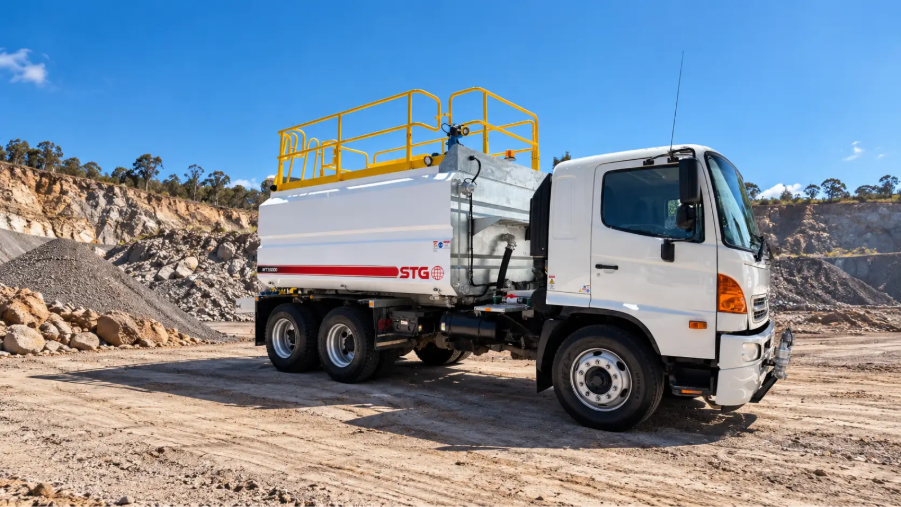
Mining sites can involve larger operating areas, longer travel distances and regular water application across haul roads and working areas.
The distance between the work area and refill point becomes particularly relevant. More tank capacity may reduce the number of refill trips during a shift where water demand is high and site conditions can accommodate a larger truck.
Mining operators should also consider the equipment and site specifications required for their operation. STG’s mining trucks for Queensland and the Northern Territory include water trucks alongside other specialised mining vehicles.
Water Trucks for Roadworks and Dust Suppression
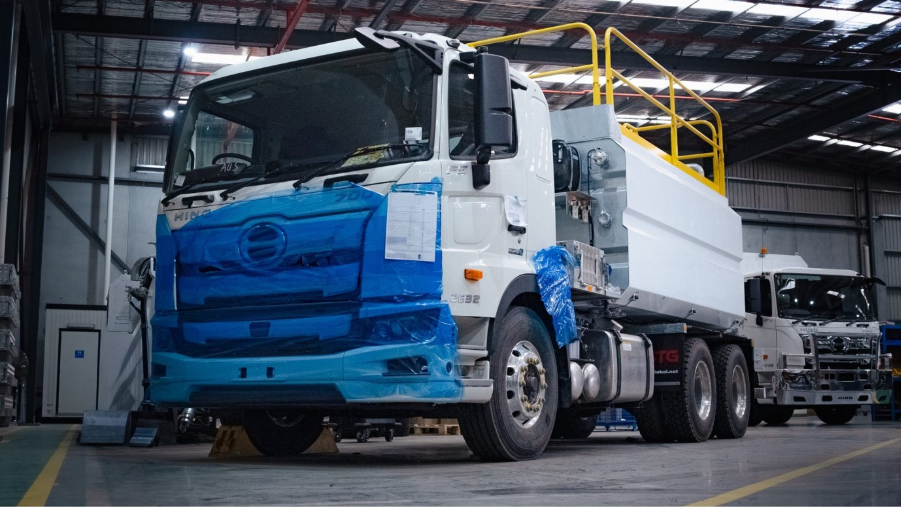
Roadworks and dust suppression applications require consideration of the area being treated and how frequently water needs to be applied.
Longer sections of road or repeated application throughout the day can increase water demand. The location of the refill point can then have a significant effect on how much time the truck spends travelling instead of applying water.
Spray coverage also matters. The required spray system should be considered alongside tank capacity so the truck can distribute water in the way the project requires.
Water Trucks for Site Water Cartage
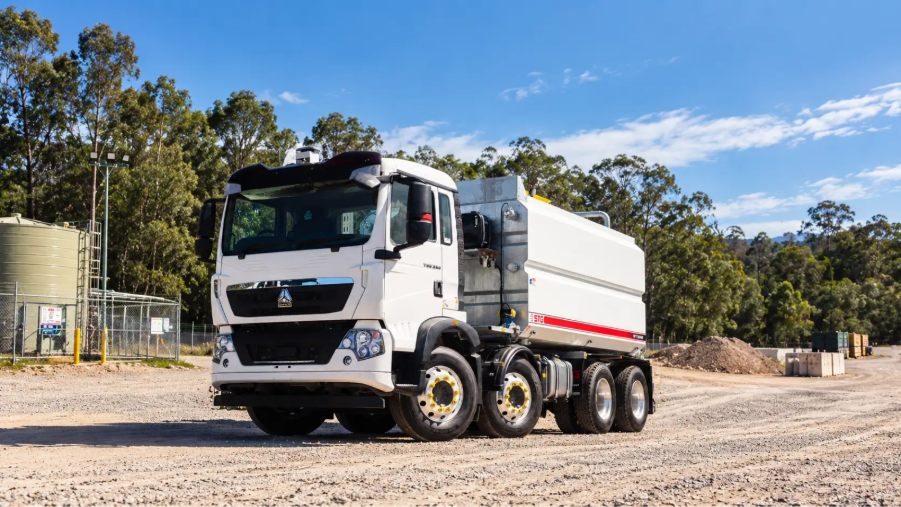
Some sites primarily need a truck to transport water between locations.
In these applications, consider the amount of water moved on each trip, travel distance and access at both the loading and delivery points.
A higher capacity may reduce the number of trips required, provided the larger chassis is practical for the roads and working areas involved.
Estimate Your Water Demand During a Typical Shift
Once the application is clear, look at how much water the operation is likely to use.
Consider the size of the area being serviced, how frequently water will be required and how long the truck is expected to operate during the day.
There is no single capacity that suits every project of a particular size. Two construction sites with similar footprints may have very different water requirements depending on site conditions, refill access and how water is being applied.
Use your expected daily operation as the basis for comparing capacities rather than relying only on the overall size of the project.
Check the Distance to Your Refill Point
Refill distance can significantly affect the working day.
A water source located close to the work area allows the truck to return to operation quickly after filling. Longer travel distances increase the time spent away from the area where water is needed.
Greater tank capacity can reduce the frequency of those trips. The benefit needs to be considered alongside the larger vehicle configuration that generally comes with higher capacity.
Estimate the distance to the refill point and how many refill trips may be required before choosing a truck size.
Consider Site Access and Chassis Configuration
The physical layout of the site can quickly narrow your options.
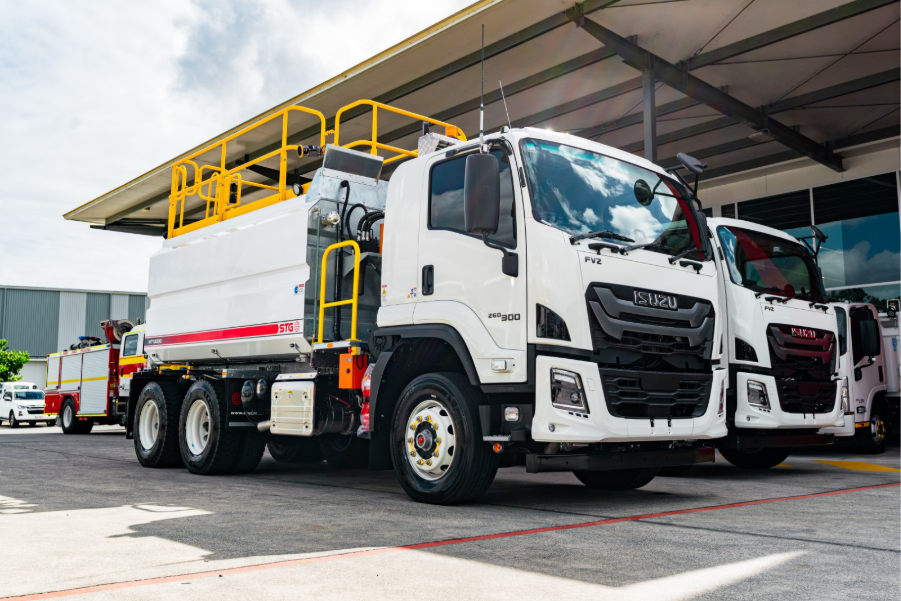
Across STG’s current water truck range, the 8,000L models use 4×2 chassis configurations. The 13,000L and 15,000L models use 6×4 configurations, while the 18,000L and 19,000L models use 8×4 chassis configurations.
Check road width, entrances, turning areas and the space available around other vehicles and equipment.
A larger capacity can be useful where water demand is high, but the truck still needs enough room to move through the site effectively.
Check How the Water Needs to Be Distributed
Tank size tells you how much water is available. The spray and distribution equipment determines how that water reaches the work area.
Consider the type of spray coverage required, operator controls and any additional equipment needed for the application.
For example, STG’s 8,000L galvanised water truck includes pneumatic in cab spray controls and a hydraulically driven water pump. Optional equipment includes a water cannon and rear pressurised dribble bar.
A road watering operation may require a different setup from a site that needs more targeted water application. Defining these requirements early helps ensure the equipment specification supports the job the truck is expected to perform.
Consider Tank Construction After Narrowing Your Options
STG offers water trucks with galvanised steel and poly tanks.
The galvanised range includes 8,000L, 13,000L and 18,000L models. Poly options are available in 8,000L, 15,000L and 19,000L capacities.
Tank construction should form part of the broader vehicle specification after the required application, approximate capacity and chassis configuration have been considered.
Operators can review the complete STG water truck range for individual model specifications and available configurations.
Compare Water Trucks for Your Queensland Project
STG’s current water truck range starts with 8,000L models on 4×2 chassis configurations and extends through to 18,000L and 19,000L models on 8×4 configurations.
Start with the work the truck needs to perform, then consider water demand, refill distance, site access and distribution requirements. Those details will usually narrow the available options considerably.
Once you have a clearer idea of the capacity and configuration required, compare STG’s water trucks for sale in Queensland to review the available models and specifications.
STG Global’s Queensland facility in Ormeau provides manufacturing, service and support for customers operating across the state.
Frequently Asked Questions About Water Truck Sizes
What Water Truck Sizes Does STG Global Offer?
STG Global offers water trucks from 8,000L to 19,000L. The current STG water truck range includes 8,000L models on 4×2 chassis configurations, 13,000L and 15,000L models on 6×4 configurations, and 18,000L and 19,000L models on 8×4 configurations.
The available tank construction and equipment also vary between models.
Is a Bigger Water Truck Always Better?
No. A larger tank can reduce refill frequency, but the truck still needs to suit the site’s access, turning space and operating conditions.
A smaller configuration such as the 8,000L galvanised water truck may be worth considering where access is tighter, while higher capacity models can suit operations with greater water demand and enough room for a larger chassis.
How Does Refill Distance Affect Water Truck Size?
A longer distance between the working area and water source can increase the amount of time spent travelling for refills.
Greater tank capacity may reduce the number of refill trips required during a shift. Higher capacity options such as the 18,000L galvanised water truck and 19,000L poly water truck can be compared where water demand justifies a larger configuration.
Site access and operating conditions still need to suit the chassis.
Does the Type of Work Affect the Water Truck Size I Need?
Yes. Civil construction, mining, roadworks, dust suppression and water cartage can place different demands on a water truck.
Mining operators can also review STG’s mining trucks for Queensland and the Northern Territory when water trucks form part of a broader specialised fleet.
For civil projects, consider water demand, access conditions, spray requirements and refill distance before comparing individual models.
Should I Choose a Galvanised or Poly Water Truck?
Tank material is one part of the overall specification.
STG’s galvanised range is available in 8,000L, 13,000L and 18,000L capacities, while poly models are available in 8,000L, 15,000L and 19,000L capacities.
The STG water truck range lets you compare both tank types alongside their capacities and chassis configurations.
Start by narrowing the capacity and chassis that suit the operation, then compare the relevant tank and equipment options.
What Information Should I Provide When Requesting a Water Truck Quote?
Have the site location, intended application, expected water demand and preferred capacity ready if possible.
It also helps to explain the site’s access conditions, refill distance and any spray or water distribution equipment required.
Once those requirements are clearer, compare STG’s water trucks for sale in Queensland before discussing the final configuration with the team.