STG FINANCE IS HERE TO HELP YOU.
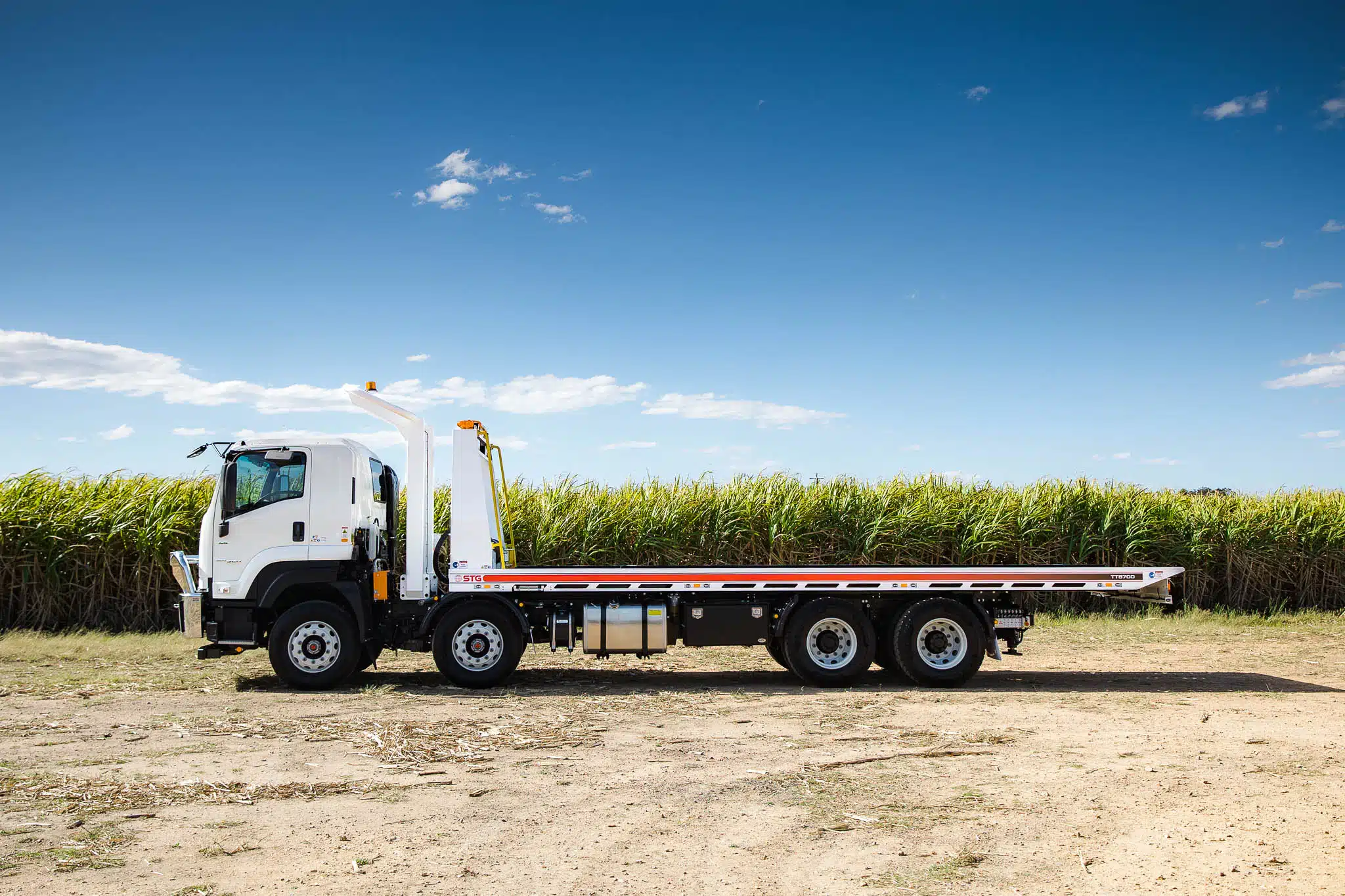
When most people think of tilt tray trucks, towing and vehicle recovery are usually the first things that come to mind.
But on modern job sites, that’s only a small part of what they’re used for.
Across civil construction, infrastructure, and plant operations, tilt tray trucks are now relied on for equipment transport, site logistics, and fleet support. Their ability to load and move machinery safely—without the need for external lifting—makes them a practical, multi-purpose solution for a wide range of industries.
For fleet managers and procurement teams, understanding these broader applications is key to getting the most value out of a tilt tray truck.
What is a Tilt Tray Truck?
A tilt tray truck is a specialised vehicle fitted with a hydraulically operated tray that tilts and slides to ground level, allowing vehicles and equipment to be loaded and unloaded safely.
This design enables:
- Loading without cranes or forklifts (for most applications)
- Controlled loading angles for improved safety
- Efficient handling of machinery and vehicles
- Reduced manual handling risks
In practical terms, it allows operators to move equipment quickly while maintaining control throughout the loading process.
Moving Beyond Towing & Recovery
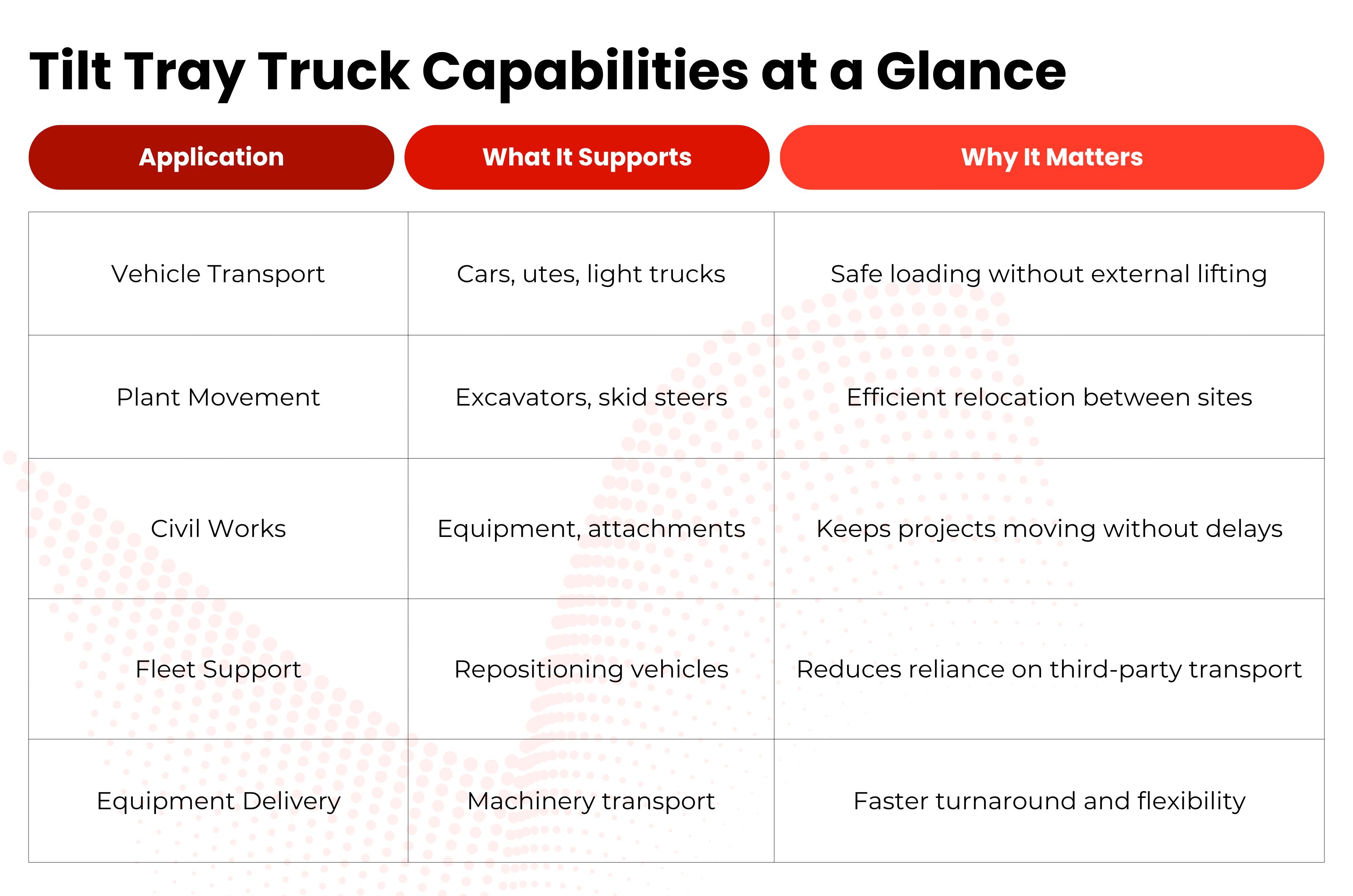
Tilt Tray Truck Applications on Real Job Sites includes:
1. Vehicle Transport
Tilt tray trucks are widely used to transport:
- Cars and utes
- Light trucks
- Non-drivable vehicles
The key advantage is safe, controlled loading, especially when dealing with damaged or immobile vehicles.
2. Plant and Equipment Movement
One of the most valuable uses of a tilt tray truck in Australia is moving plant between job sites.
Common equipment includes:
- Excavators
- Skid steers
- Scissor lifts
- Small to mid-sized machinery
This reduces reliance on third-party transport and gives operators more control over scheduling.
3. Civil and Construction Support
On civil and infrastructure projects, keeping equipment moving is critical.
Tilt tray trucks support operations by:
- Relocating machinery between work zones
- Transporting attachments and tools
- Responding quickly to changing site requirements
This flexibility helps reduce delays and keeps projects on track.
4. Equipment Delivery
Tilt trays are often used for:
- Delivering new machinery to site
- Transporting equipment between depots
- Supporting internal logistics
Instead of coordinating multiple transport providers, one truck can handle delivery, relocation, and recovery.
5. Fleet Support and Logistics
For businesses running multiple vehicles, a tilt tray truck becomes a support asset.
It can be used for:
- Repositioning fleet vehicles
- Recovering equipment internally
- Reducing downtime across operations
This improves overall fleet efficiency and utilisation.

Transporting Machinery and Equipment
One of the most valuable applications of a tilt tray truck is moving plant and equipment between job sites.
Common loads include:
- Excavators
- Skid steers
- Scissor lifts and access equipment
- Small to mid-sized machinery
Using a single transport solution helps:
- Reduce reliance on external logistics providers
- Improve scheduling flexibility
- Minimise downtime between projects
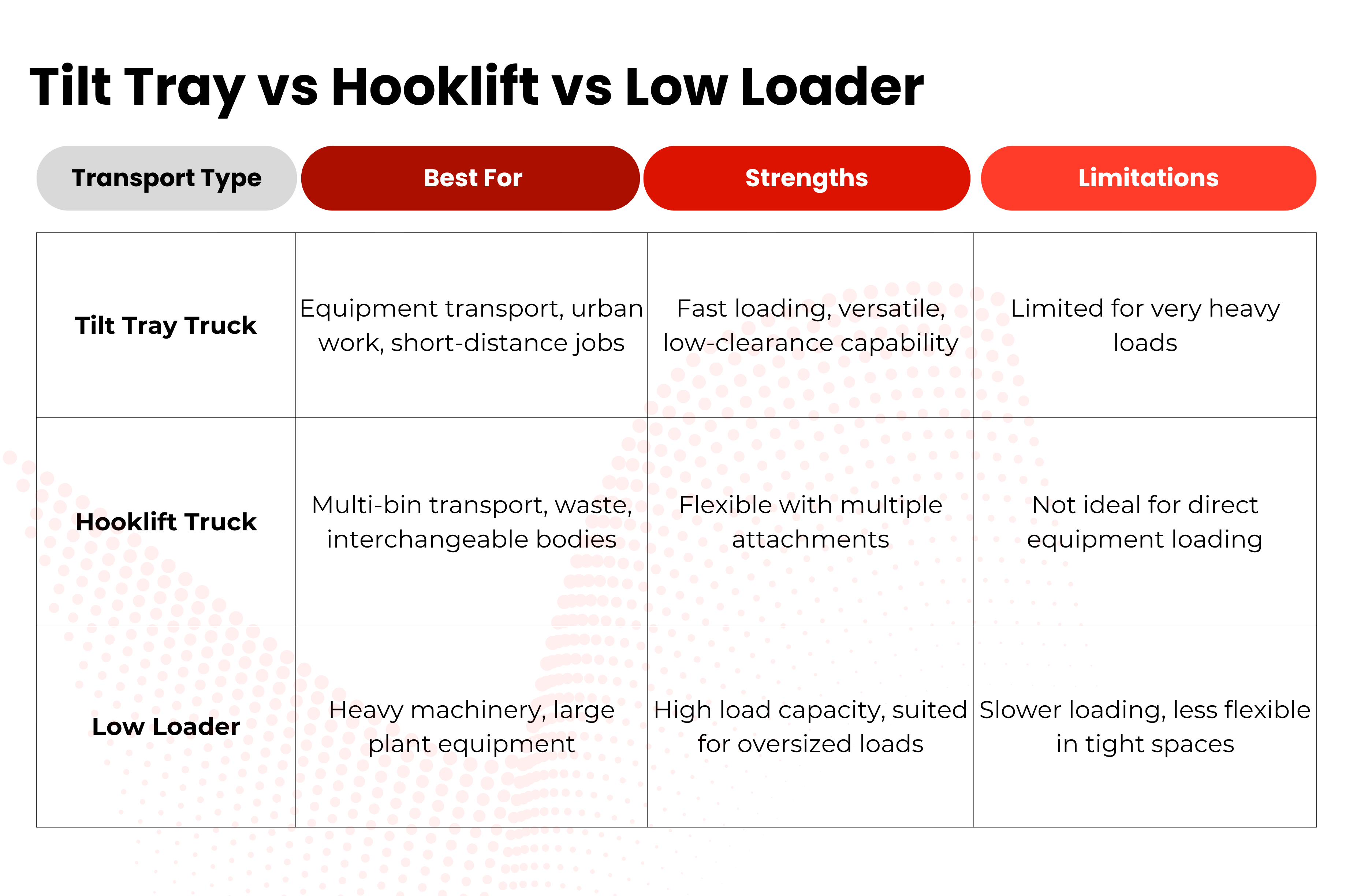
Tilt Tray vs Other Transport Options
Tilt trays offer clear advantages in certain scenarios.
Tilt trays are ideal for:
- Short-distance transport
- Urban or tight-access environments
- Smaller machinery and equipment
- Jobs requiring quick turnaround
Low loaders are better for:
- Heavy or oversized equipment
- Long-distance transport
- High-capacity hauling
Key Features That Enable Versatility
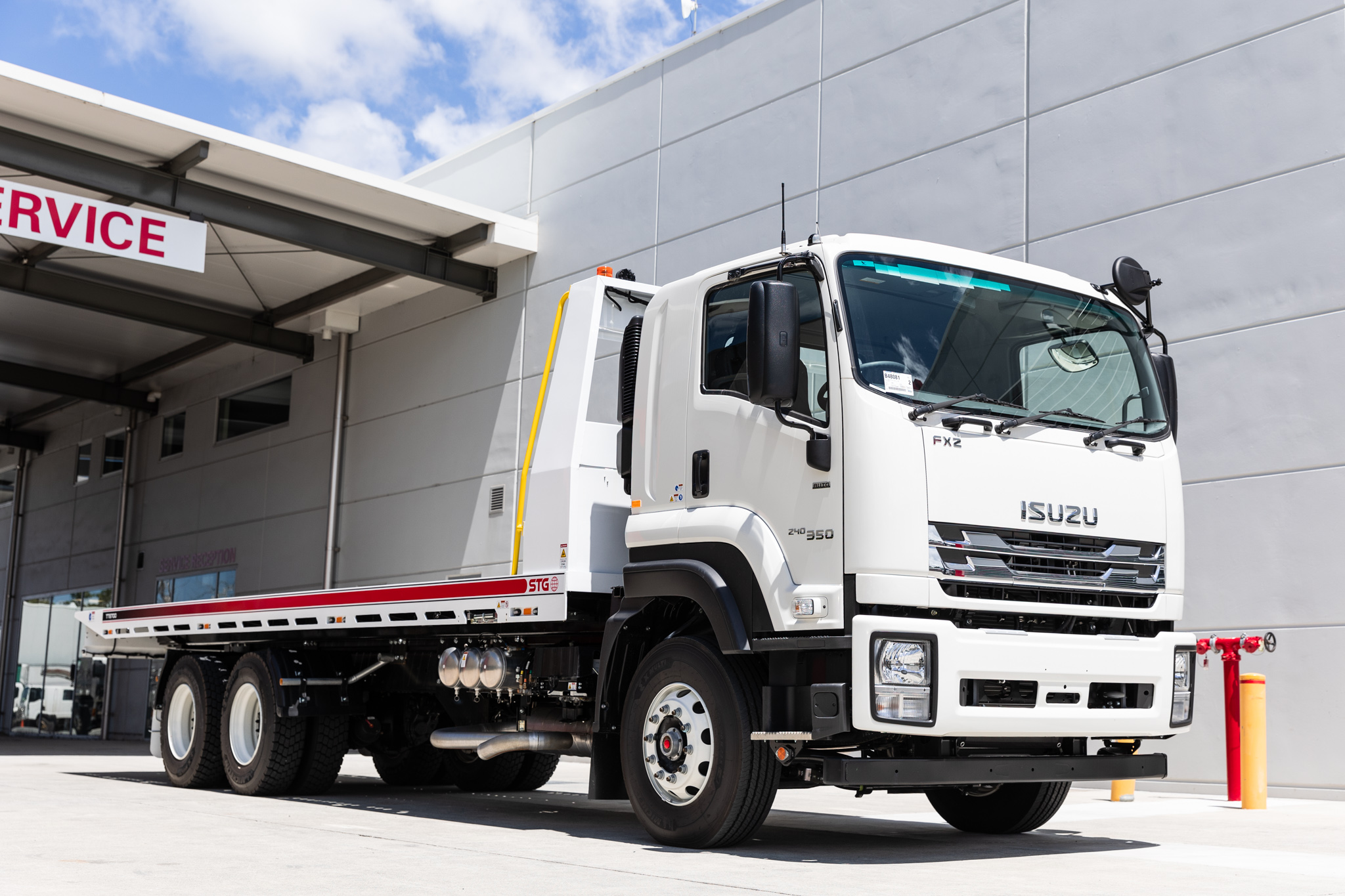
The versatility of a tilt tray truck comes down to its core components.
Hydraulic System
Provides smooth and controlled tray movement, improving safety during loading and unloading.
Winch System
Allows non-operational equipment to be loaded without external lifting equipment.
Tray Design and Capacity
Determines what type of loads the truck can handle and how stable they are during transport.
Why 0° Tilt Tray Matters
One of the key advancements in modern tilt tray truck design is the near-zero or 0° tilt tray. Unlike traditional trays that sit at a noticeable angle, this design keeps the deck almost completely flat.
This delivers several practical benefits:
- Safer loading for low-clearance vehicles
- Reduced risk of scraping or damage
- Smoother transition from ground to tray
- Greater flexibility across different load types
For operators handling performance vehicles or specialised equipment, this feature significantly expands what a tilt tray truck can safely transport.
At STG Global, this low-angle design is a key part of delivering practical, job-ready tilt tray solutions.
Safety on the Job Site
Safe operation is critical when using a tilt tray truck.
Key considerations include:
- Proper load positioning and securing
- Stable ground conditions during loading
- Controlled hydraulic operation
- Use of appropriate PPE and trained operators
For example, correct load placement (typically forward of the rear axles) and the use of stabilisers during loading help maintain stability and reduce risk during operation.
Build Quality and Durability
Tilt trays operate in demanding environments with constant loading cycles.
High-quality builds often use materials such as Hardox®, which provide:
- Better resistance to wear and impact
- Longer service life
- Reduced maintenance needs
A durable tilt tray truck delivers stronger long-term value.
Matching the Right Tilt Tray to the Job
Choosing the right tilt tray truck depends on:
- Load type and weight
- Frequency of use
- Site conditions
- Access requirements
Typical setups:
- Urban work → compact and manoeuvrable
- Civil/construction → higher capacity and durability
STG Global’s Tilt Tray Trucks are configured across these applications, with options available to match both light-duty and high-demand site requirements.
If you’re currently reviewing your fleet or planning your next purchase, it’s worth taking a closer look at what’s available. Check STG’s current tilt tray truck options to find a configuration that fits your operation—without the usual wait times.
Choosing the Right Tilt Tray Truck for Your Fleet
Selecting the right truck depends on your operation.
Consider:
- Type of equipment being transported
- Frequency of use
- Site conditions and access
- Required load capacity
Long-term factors also matter:
- Durability
- Maintenance requirements
- Availability of parts and service support
Still comparing options? It helps to see how different setups perform in real conditions—not just on paper. STG Global’s tilt tray truck playlist includes real-world applications, equipment transport scenarios, and feature breakdowns, giving you a clearer understanding of how different configurations operate across job sites
Watch the videos here:
https://youtube.com/playlist?list=PLtUOynssGwjjQ0k9V8FZEc7hG-87oaUcE&si=FxpRPBRDBafRT6pH
Seeing the trucks in action can make it easier to identify what setup best suits your operation before making a final decision.
Frequently Asked Questions
What can a tilt tray truck carry?
Tilt tray trucks can carry vehicles, light trucks, and a wide range of machinery such as excavators, skid steers, and access equipment—depending on capacity.
Is a tilt tray better than a low loader?
It depends on the application. Tilt trays are better for flexibility and quick transport, while low loaders are suited for heavy and oversized equipment.
Do I need a tilt tray truck for my fleet?
If your operation regularly moves equipment or vehicles between sites, a tilt tray can reduce downtime and improve scheduling control.
Explore Tilt Tray Trucks Built for Real Job Site Demands
Explore STG Global’s tilt tray trucks: https://stgglobal.net/tilt-tray-trucks/
View available in-stock units: https://stgglobal.net/truck-type/in-stock/