STG FINANCE IS HERE TO HELP YOU.
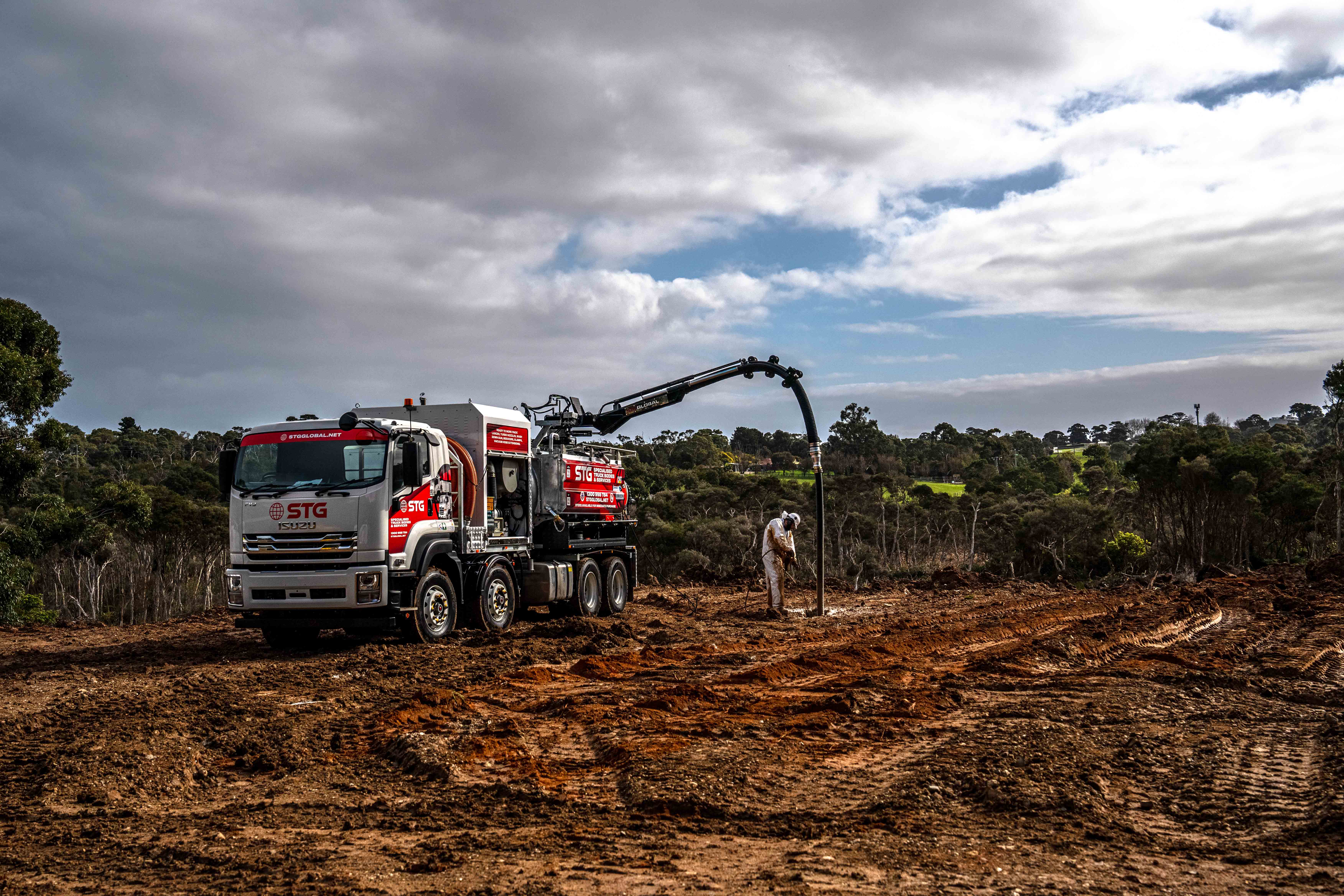
When comparing vacuum trucks, it’s common to focus on headline specs—tank size, suction figures, or airflow claims. While these numbers are useful, they don’t always reflect how a vacuum truck will perform on a real job site.
In practice, performance depends on how the entire system works together. Factors like material type, operating conditions, maintenance access, and overall system design play a much bigger role than individual specs alone.
From civil and utilities work to mining and construction, the difference between a well-configured vacuum excavation truck and an average one becomes clear quickly. The right setup improves productivity, reduces downtime, and supports safer operations over the long term.
This guide breaks down the specifications that actually matter—so you can compare vacuum trucks based on real-world performance, not just numbers on a brochure
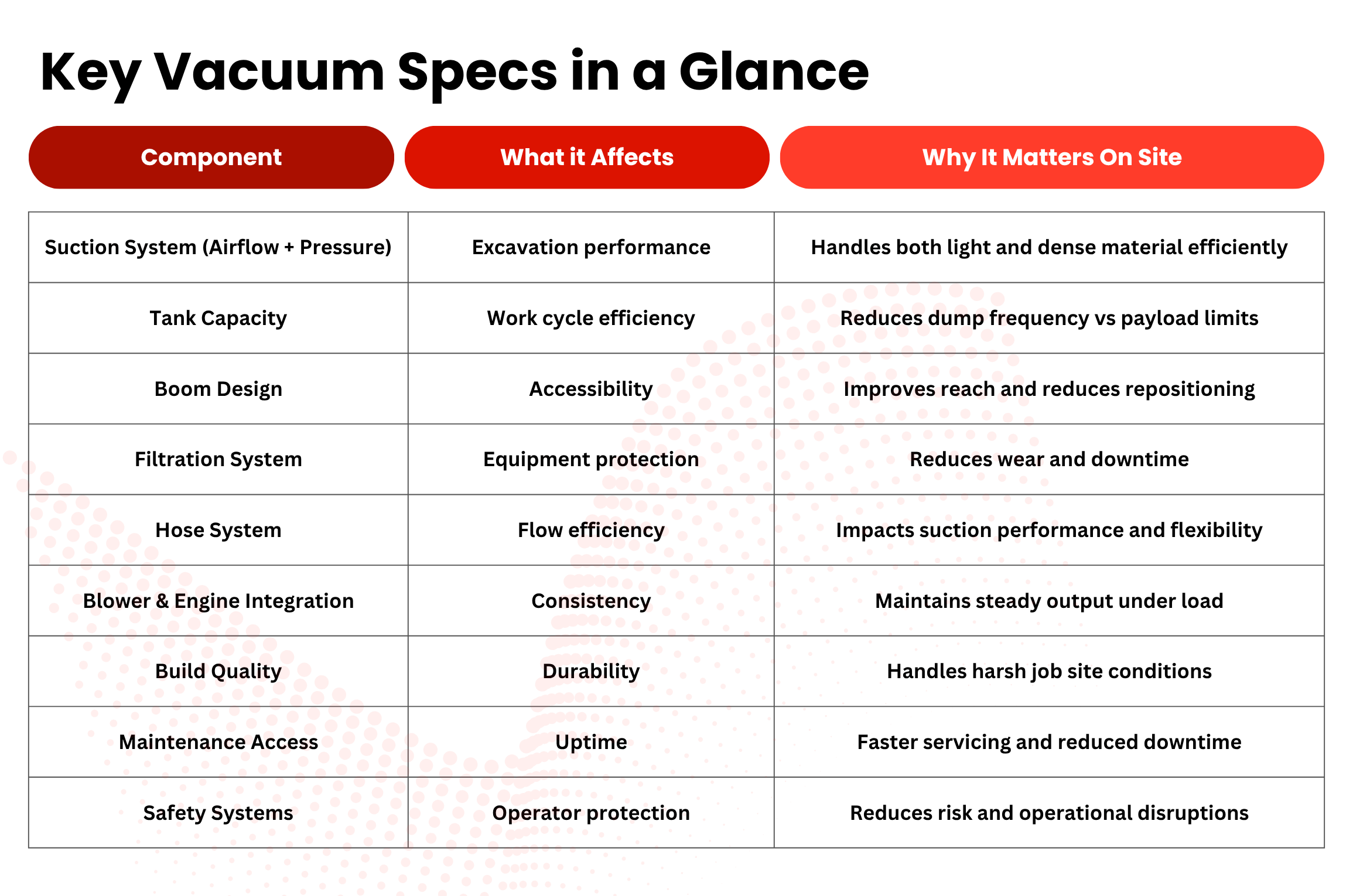
What is a Vacuum Truck?
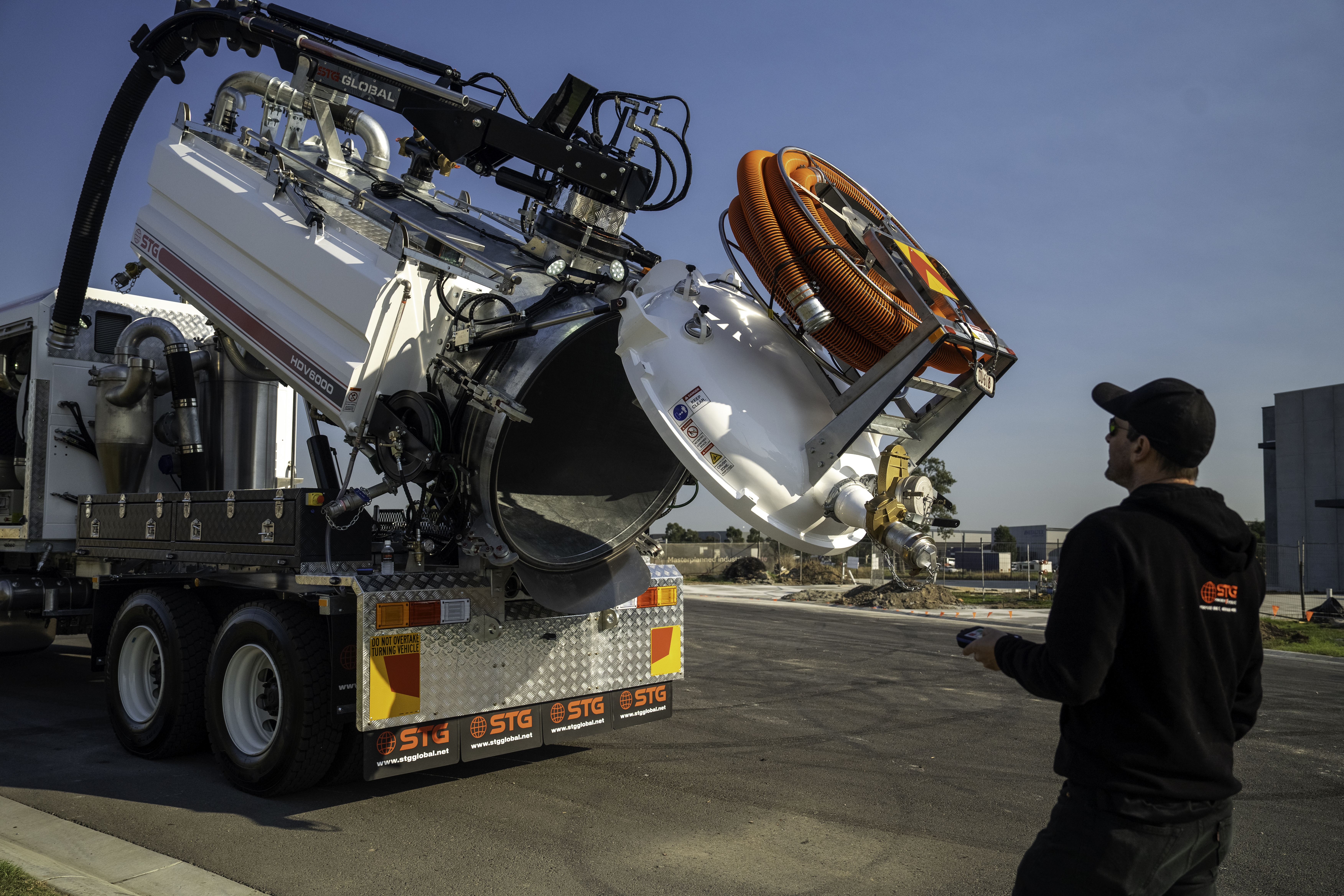
A vacuum truck is a specialised unit designed for excavation, debris removal, and liquid waste handling using high-powered suction systems.
By combining vacuum technology, debris storage, and hydraulic controls, these trucks allow for precise, non-destructive material removal without mechanical digging.
In practical terms, vacuum truck excavation is widely used for:
- Non-destructive digging (NDD)
- Utility exposure
- Trenching support
- Site clean-up
This makes the vacuum excavator truck essential in environments where accuracy and minimal disruption are critical.
Why Specs Matter More on Real Job Sites
Spec sheets are useful for comparison, but they rarely tell the full story.
Real job site performance depends on:
- Material density and moisture
- Hose configuration and reach
- Duty cycles and operating hours
- Maintenance practices
A truck that looks strong on paper can underperform if these factors aren’t considered.
Poor specification often leads to:
- Slower excavation
- Higher fuel usage
- Increased downtime
Over time, this translates into higher operating costs and reduced productivity.
Suction Performance: More Than Just Numbers
Vacuum performance isn’t defined by a single number.
It’s a combination of:
- System pressure
- Airflow efficiency
- Engine output and control
In STG vacuum trucks, suction performance is managed through an integrated system where engine RPM directly influences material extraction rates. This allows operators to adjust performance based on site conditions rather than relying on fixed output.
The key is balance. A well-designed vacuum excavation truck maintains consistent suction across different materials—whether dry soil, wet sludge, or compacted debris.
Tank Capacity and Debris Handling
Tank capacity affects how long a vacuum truck can operate before unloading. Larger tanks reduce the need for frequent dumping, which is particularly beneficial on remote or high-volume sites.
However, increased capacity also affects weight distribution, payload limits, and manoeuvrability. This is especially relevant in urban or confined environments.
Larger tanks reduce the need for frequent dumping, which is beneficial on remote or high-volume job sites. However, bigger isn’t always better.
Higher capacity affects:
- Payload limits
- Weight distribution
- Manoeuvrability
Tank design also matters. Efficient tipping systems and clean-out features help reduce unloading time and prevent material build-up, keeping work cycles consistent.
Boom Design and Reach
Boom design plays a critical role in real-world productivity.
A well-designed boom allows operators to:
- Reach difficult or confined areas
- Reduce repositioning time
- Improve precision around utilities
STG vacuum trucks feature hydraulically controlled boom systems with multi-directional movement, allowing operators to position the suction hose accurately and safely.
In tight or complex job sites, this flexibility can significantly improve efficiency.
Blower System and Engine Performance
The blower system is the core of any vacuum truck—but it only performs as well as its integration with the engine and hydraulic systems.
In STG units:
- Vacuum is controlled via suction/discharge systems
- Output is adjusted through engine RPM
- Performance remains stable under continuous load
This integration ensures:
- Consistent suction performance
- Reduced strain on components
- Improved fuel efficiency
Poorly integrated systems, on the other hand, often lead to fluctuating performance and increased wear.
Filtration System: Protecting the Equipment
Filtration is one of the most critical—and often overlooked—parts of a vacuum truck.
STG vacuum trucks use a combination of:
- Cyclone separation (for heavy particles)
- Bag house filtration (for fine particles)
This multi-stage system prevents debris from reaching critical components like the blower.
The result:
- Reduced wear
- Longer service intervals
- More consistent performance
Without proper filtration, even high-spec machines will experience premature failure.
Hose Size and Length: Small Detail, Big Impact
Hose configuration has a direct impact on performance.
Factors that matter:
- Hose diameter
- Hose length
- System pressure compatibility
Longer hoses improve reach, but must be matched with system capability to avoid performance loss.
STG vacuum trucks also integrate high-pressure systems (up to 2500 PSI) for applications requiring material breakdown before extraction—improving overall efficiency on tougher jobs.
Remote Operation and Control
Modern vacuum trucks are designed for both performance and operator safety.
STG units include remote control systems that allow operators to:
- Control boom movement
- Operate suction systems
- Manage unloading functions
This enables operation from a safe distance, improving visibility and reducing exposure to hazardous environments.
On complex job sites, this feature significantly improves both safety and efficiency.
Safety Features on Modern Vacuum Trucks
Safety is a critical consideration, particularly in high-risk environments such as construction and mining.
Modern vacuum trucks are equipped with features such as emergency stops, boom interlocks, and pressure relief systems. These help protect both operators and equipment during operation.
Strong safety systems also support uptime by reducing the likelihood of incidents and operational disruptions.
Build Quality and Materials
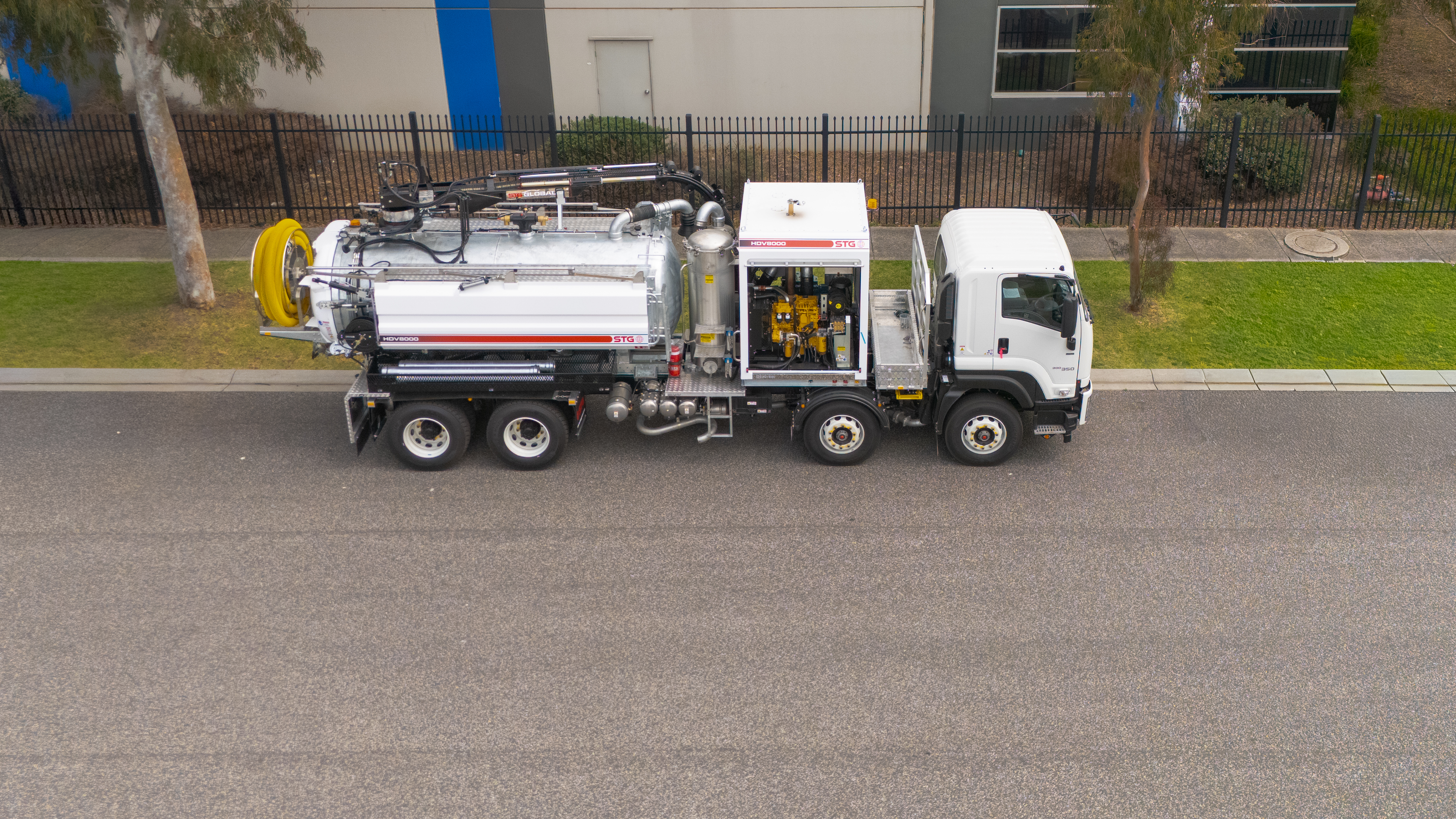
Durability plays a major role in how well vacuum trucks perform over time. Job sites expose equipment to constant wear, impact, and harsh conditions.
The use of high-grade materials such as Hardox® improves resistance to abrasion and structural fatigue, particularly in high-wear areas like debris tanks.
Stronger builds reduce maintenance requirements and extend service life, resulting in lower lifecycle costs.
Ease of Maintenance and Access
Maintenance access directly affects uptime. Poorly designed layouts can slow down servicing, leading to longer downtime and reduced productivity across projects.
Well-designed vacuum excavator trucks allow easy access to key components, making routine inspections, servicing, and repairs faster and more efficient. This reduces turnaround time and helps keep equipment operating consistently in demanding conditions.
Just as important is the availability of parts and service support. A truck is only as reliable as the support behind it. According to STG’s service framework, customers are backed by dedicated service centres, mobile support, and an expanding authorised network, ensuring access to maintenance and genuine parts even in regional or remote locations.
With access to reliable servicing, technical support, and readily available spare parts, fleets can minimise downtime, reduce operating costs, and keep trucks performing at their best over the long term.
For more on STG’s service and parts support, visit: https://stgglobal.net/service/
Matching Vacuum Truck Specs to Application
No single configuration suits all job sites. Different applications place different demands on vacuum trucks, and selecting the wrong setup can quickly impact productivity, safety, and operating costs. Different applications require different setups:
- Utility work: precision, compact design, flexibility
- Civil projects: higher capacity and consistent output
- Mining operations: heavy-duty systems and continuous operation
Selecting the right vacuum excavation truck comes down to aligning specifications with actual operational requirements, not simply choosing the largest or most powerful option available. Factors such as material type, excavation depth, site access, and duty cycle should all guide the decision.
To help with this, STG Global offers a range of vacuum excavation trucks configured for different applications, making it easier to identify a solution that fits your specific needs.
You can explore available configurations here: https://stgglobal.net/vacuum-excavation-trucks/
Common Mistakes When Comparing Vacuum Trucks
A common mistake when evaluating vacuum trucks is focusing too heavily on individual specifications such as tank size or upfront cost, without considering how the entire system performs under real operating conditions.
Critical factors like airflow balance, filtration quality, maintenance access, and after-sales support are often overlooked. These elements have a direct impact on long-term performance, reliability, and overall cost of ownership, particularly in demanding environments where uptime is essential.
Taking a broader, system-level view helps avoid underperforming equipment and unexpected operational issues.
For a more detailed breakdown of what to consider when comparing specialised trucks, read our article: The Ultimate Truck Comparison Guide: Key Factors to Consider Before You Buy.
Choosing the Right Vacuum Truck for Your Fleet
Selecting the right vacuum trucks starts with understanding your operational needs—application type, job site conditions, and workload. Without this clarity, it’s easy to over-spec or under-spec a unit, both of which can impact efficiency and long-term costs.
Beyond specifications, it’s equally important to consider factors such as reliability, maintenance requirements, and support availability. These determine how the truck performs over its lifecycle—not just at the point of purchase. A well-matched vacuum excavation truck should deliver consistent output, adapt to site conditions, and remain cost-effective over time.
At STG Global, the focus is on delivering fit-for-purpose solutions, ensuring each truck is configured to perform reliably in real-world conditions.
If you’re still comparing options or want to better understand how different setups perform on-site, it can help to see the equipment in action.
STG Global’s Vacuum Truck youtube playlist provides walkarounds, feature breakdowns, and real-world applications, giving you a clearer picture of how different configurations operate:
https://youtube.com/playlist?list=PLtUOynssGwjjrh3iWc4e4QoaiBAgDjawY&si=mCkJLp6S_Od_sZYJ
Conclusion
Choosing the right vacuum truck isn’t about chasing the highest numbers.
It’s about understanding how each component works together in real job site conditions.
Suction performance, tank design, filtration, and maintenance all play a role—but it’s the complete system that determines long-term value.
Taking a practical, system-focused approach ensures better performance, improved safety, and stronger returns over the life of the equipment.
Explore Vacuum Trucks Built for Real Job Site Performance
Explore STG Global’s vacuum trucks:
https://stgglobal.net/truck-type/vacuum-trucks/
View available units:
https://stgglobal.net/truck-type/in-stock/