STG FINANCE IS HERE TO HELP YOU.
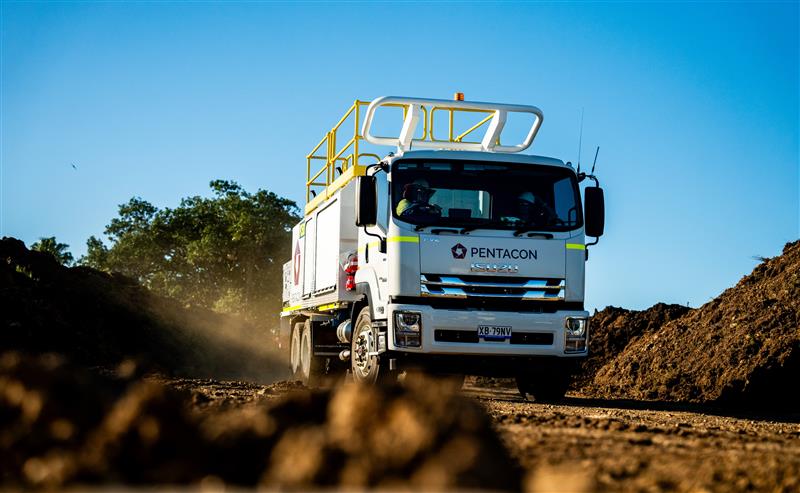
Civil and mining projects across Australia are becoming larger, more complex, and more demanding on equipment. According to ConsultANZ, Australia’s major public infrastructure pipeline is valued at approximately $242 billion, highlighting sustained growth across transport, utilities, and construction projects that rely heavily on high-performing vehicle fleets.
At the same time, mining developments, particularly in remote regions such as Western Australia and the Northern Territory continue to expand, placing increased operational pressure on site vehicles.
As infrastructure expands and mining operations push into harsher environments, fleet decisions are no longer driven by payload and price alone. Compliance, durability, safety systems, and task-specific design are increasingly shaping how truck manufacturers in Australia respond to modern project requirements.
This article examines how these evolving conditions are changing truck specifications across the civil and mining sectors, and what civil contractors, mining project managers, procurement teams, and fleet managers should consider when researching modern construction trucks and mining trucks.
The Changing Landscape of Civil and Mining Projects in Australia
Large transport, energy, and utilities projects are being delivered alongside long-life mining operations that are increasingly located in remote regions across Australia. With close to 80% of the country still underexplored, particularly in Western Australia and the Northern Territory, future discoveries are expected to drive further mine development and place greater demands on mining trucks operating in harsh, high-utilisation environments (source: The Underground Miner).
At the same time, tighter project timelines and rising compliance expectations are reshaping fleet planning. Durability, reliability, and task-specific performance are now central to how construction trucks and specialised trucks australia are evaluated, influencing how truck manufacturers australia and australian truck manufacturers respond to modern project requirements.
To explore how specialised truck design supports efficiency in these environments, we invite you to read our article, The Role of Specialised Trucks in Mining Efficiency.
Why Traditional Truck Specs No Longer Cut It
For many civil and mining operations, legacy one-size-fits-all truck specifications are increasingly misaligned with modern project demands. Higher utilisation rates, tighter safety controls, and efficiency targets are exposing the limitations of generic builds, particularly when vehicles are under-spec’d for their intended environment. The consequences are immediate and measurable, including unplanned downtime, increased maintenance intervention, and heightened safety exposure on active worksites.
These pressures are reinforced by stricter safety expectations, growing emphasis on fuel efficiency and emissions reduction, and historical design constraints that limited the adoption of newer technologies. Recent regulatory changes, such as increasing allowable vehicle width to 2.55 metres to align with global standards, have removed long-standing barriers to safer cab design and advanced safety systems.
In this context, the shift away from standardised specifications highlights why selecting the right build philosophy has become as important as selecting the vehicle itself, a topic explored further in our article, Why Choose STG: Discover the Unique Edge We Bring to Specialised Trucks.
Safety and Compliance Now Drive Truck Design
Safety and compliance now play a defining role in truck design across Australia’s civil and mining sectors. Evolving site standards and frameworks such as the Australian Design Rules are requiring truck manufacturers to prioritise compliant design.
At the same time, safety features that directly protect operators are becoming standard expectations. Visibility, safe access, guarding, and rollover protection now form a core part of vehicle specification. In response, STG has adopted a range of safety features across its specialised trucks australia portfolio, applied where appropriate to specific applications, including:
- Lift-zone monitoring on STG garbage trucks to help detect hazards during bin lifting operations.
- ROPS on mining truck units to improve operator protection in rollover events.
- Camera and mirror systems to reduce blind spots around the vehicle.
- Compliant access systems such as properly designed steps, ladders, and handrails.
Together, these measures reflect how safety-led design is now shaping truck specifications, influencing how fleets are evaluated and selected during the research phase.
Site Conditions Are More Demanding Than Ever
Civil and mining operations are increasingly taking place in remote locations, across rough terrain, and in extreme climates. Unsealed roads, constant vibration, heavy payloads, and limited access to maintenance support place sustained stress on vehicles, requiring construction trucks and mining trucks to be engineered for durability rather than standard operating conditions.
As a result, corrosion protection and component selection have become critical specification considerations. High temperatures and coastal or high-salinity environments accelerate structural degradation, making advanced protection measures essential, while heavy-duty suspension systems and efficient cooling play a key role in maintaining uptime. Within STG’s range, galvanised water trucks demonstrate this approach by providing long-term resistance in harsh operating environments.
The two images below, taken from a customer site at CQ Mining, show this contrast clearly. While the chassis has already begun to corrode, the galvanised water tank and truck body remain intact and rust-free. Because the body is still structurally sound, it can be transferred onto a new chassis, extending the vehicle’s service life and reinforcing how STG-built trucks are designed for long-term durability and reuse in demanding conditions.


Productivity Pressures Are Changing What Fleets Need
Faster operating cycles, reduced downtime, and higher asset utilisation are now baseline requirements rather than performance targets. For fleet managers, this places greater emphasis on reliability and serviceability, particularly when operating under continuous or high-load duty cycles where unplanned downtime directly impacts project delivery.
To meet these demands, fleets are increasingly favouring integrated systems over generic configurations. Vehicles designed around specific tasks, rather than adapted after delivery, support more efficient workflows and reduce mechanical strain.
At STG, we support this approach through STG Parts & Service, helping fleets access the right components and technical support faster to minimise maintenance delays and keep specialised trucks australia operational for longer.
Our service capabilities and coverage are detailed at https://stgglobal.net/service, with service locations across Queensland, Victoria, New South Wales, and Western Australia. Dedicated parts access is available via https://www.stgparts.net, reinforcing why ongoing support has become a key consideration when evaluating truck manufacturers australia.
How Specialised Truck Manufacturers Are Responding
As project demands become more specific, off-the-shelf builds are increasingly being replaced by custom-engineered solutions. Contractors now require trucks designed around site conditions, workflows, and safety requirements, driving truck manufacturers australia to move beyond standard specifications and deliver purpose-built outcomes.
This shift has led to closer collaboration between contractors and australian truck manufacturers during the design phase.
STG’s work with Tropical Waste is one example, where operational input resulted in the integration of a remote-control system on front loader trucks to improve visibility and safety. This co-creation model reflects how specialised trucks are increasingly developed through partnership rather than pre-set designs.
“Comparing new to old, the technology is more advanced. The ipad provides a lot of functionality and a lot of instant information display. I’d never realize how handy the diagram of the truck and operation would be until you actually get in there and use it and your realize, “hang on, I’ve still got a moment to compact and the body is not quite all the way into the end of it’s function and then you let it work it’s magic and it does it.”
– Mitchell Farmer, Operations and Contract Manager of Tropical Waste Townsville, Australia.
Watch the full video to know more about our collaboration:
What to Consider When Specifying Trucks for Modern Projects
Specifying trucks for modern projects means aligning configuration with real operating demands rather than generic specifications. Application, payload, terrain, and regulatory requirements should guide decisions around drivetrain, axle setup, body design, and structural reinforcement, particularly for construction trucks and mining trucks operating in the demanding conditions outlined earlier.
Looking beyond the upfront price is just as important. Fuel efficiency, maintenance access, parts availability, and expected service life all affect long-term operating costs and overall fleet performance.
If you’re currently comparing options or planning a future fleet purchase, we recommend reading our Ultimate Truck Comparison Guide, where we walk through the key factors to consider before you buy and help you evaluate truck options with greater confidence.
Why Australian-Built Specialised Trucks Matter
As project requirements become more demanding, the value of locally built solutions is increasingly clear. Australian truck manufacturers operate within local regulatory frameworks and understand site-specific safety and compliance expectations, enabling specialised trucks australia to be specified accurately and delivered with shorter lead times. Local manufacturing and support networks also help reduce downtime, an important consideration for fleets operating under tight project schedules.
Designing trucks specifically for Australian conditions is equally critical. Heat, dust, remote terrain, and high utilisation rates place unique stresses on vehicles that generic imports are not always engineered to withstand. Purpose-built construction trucks and mining trucks developed for these environments support greater durability, reliability, and long-term performance on site.
At STG, our approach to specialised truck manufacturing is shaped by Australian conditions, local standards, and the real demands our customers face on site. From engineering and compliance through to service and support, we focus on delivering solutions that perform reliably where they are needed most.
If you’d like to understand what sets our approach apart, we invite you to read Why Choose STG: Discover the Unique Edge We Bring to Specialised Trucks.
Conclusion
Civil and mining projects are placing new demands on fleet performance, safety, and reliability, making purpose-built truck specifications more important than ever. Understanding how site conditions, compliance requirements, and long-term operating costs affect vehicle selection helps ensure fleets are fit for today’s project environments.
If you’re planning a new project or reviewing your fleet requirements, our team can help guide the specification process.
Talk to us via:
Phone: 1300 998 784
Email:
- Truck inquiries: sales@stgglobal.net
- Servicing inquiries/schedules: service@stgglobal.net
- Parts needs: parts@stgglobal.net